
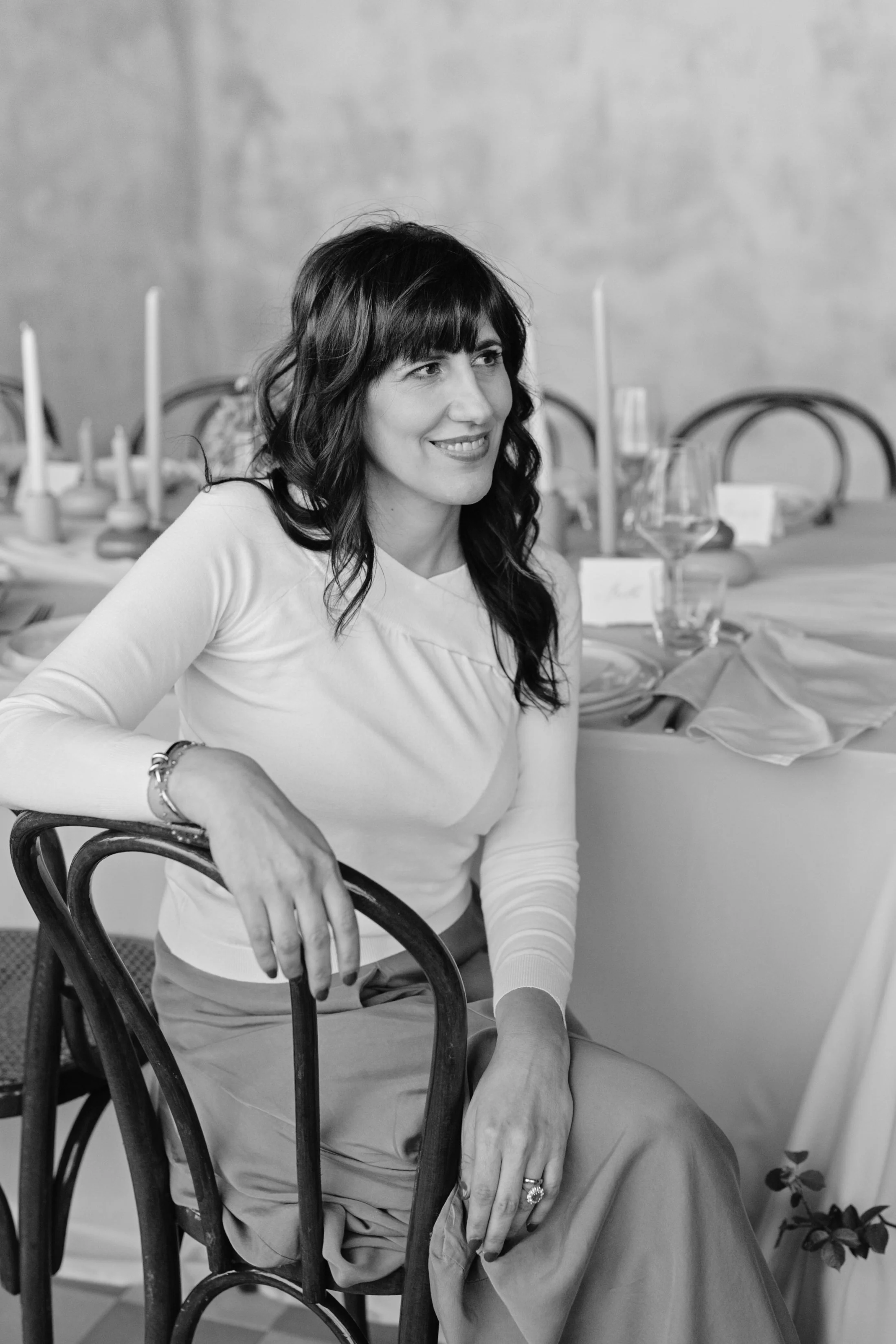
In this interview, we sit down with Chiara of Chiara Metefori Events, a planner known for crafting refined, deeply personal celebrations across Italy. With a thoughtful approach that blends aesthetic sensitivity and meaningful storytelling, Chiara creates weddings that feel both elevated and authentic.
We spoke about her journey into the world of destination weddings, her design philosophy, and what it truly takes to create an experience that lingers long after the day itself.
Hi Chiara, thanks for finding the time for this interview.
How did you first get into wedding planning, was it something you always wanted to do?
Thank you for this question. I do not think I have ever shared this story in full. There are many aspects of this work that I had been cultivating for years, long before I was consciously aware of it. From a young age, I was already organizing celebrations. At ten years old, I planned my own birthday parties and even prepared some of the desserts myself, though that is another story.
I have always been drawn to creative worlds, from handcrafted décor to art history, but also to travel and meaningful experiences. I have always loved discovering places, understanding their atmosphere, and searching for what feels authentic rather than simply attractive on the surface. I have never been interested in stopping at the commercial proposal. I naturally look beyond it, searching for the most meaningful experience, the hidden value, and the real essence of a place.
I believe this mindset has shaped the way I work today. Planning a wedding is never just about selecting suppliers or a venue. It is about creating an experience. I only became fully aware of this path in 2010, when I began attending my first courses while working in other fields, I moved closer to the industry in a concrete when a wedding planner asked me to collaborate on a styled wedding photoshoot, which was later featured on Style Me Pretty.
After that, I organized my own wedding. Following the wedding, I began collaborating with a supplier who had been impressed by my attitude and approach. From there, things evolved gradually until I opened my own business in 2020, during the pandemic, not exactly the easiest time to begin working in destination weddings :-)
• When you started Chiara Metefori, what kind of weddings did you imagine yourself creating?
At the time, I was pursuing an ideal of perfection. To me, perfection meant something completely coherent, intentional, and readable on many levels. Something that would feel beautiful to everyone, yet also carry a deeper meaning. That approach has remained with me, but I have shifted away from the idea of perfection and moved toward the realm of emotion. Emotions, what you truly felt in those moments, are what make a wedding authentic and what stay with you over time.
• What part of your job still excites you the most after all these years?
During the planning process, definitely the choice of venue. It is a journey I take together with my couples, a process of selection based on their wishes. It is the beginning of everything, the foundations of the home we are about to build.
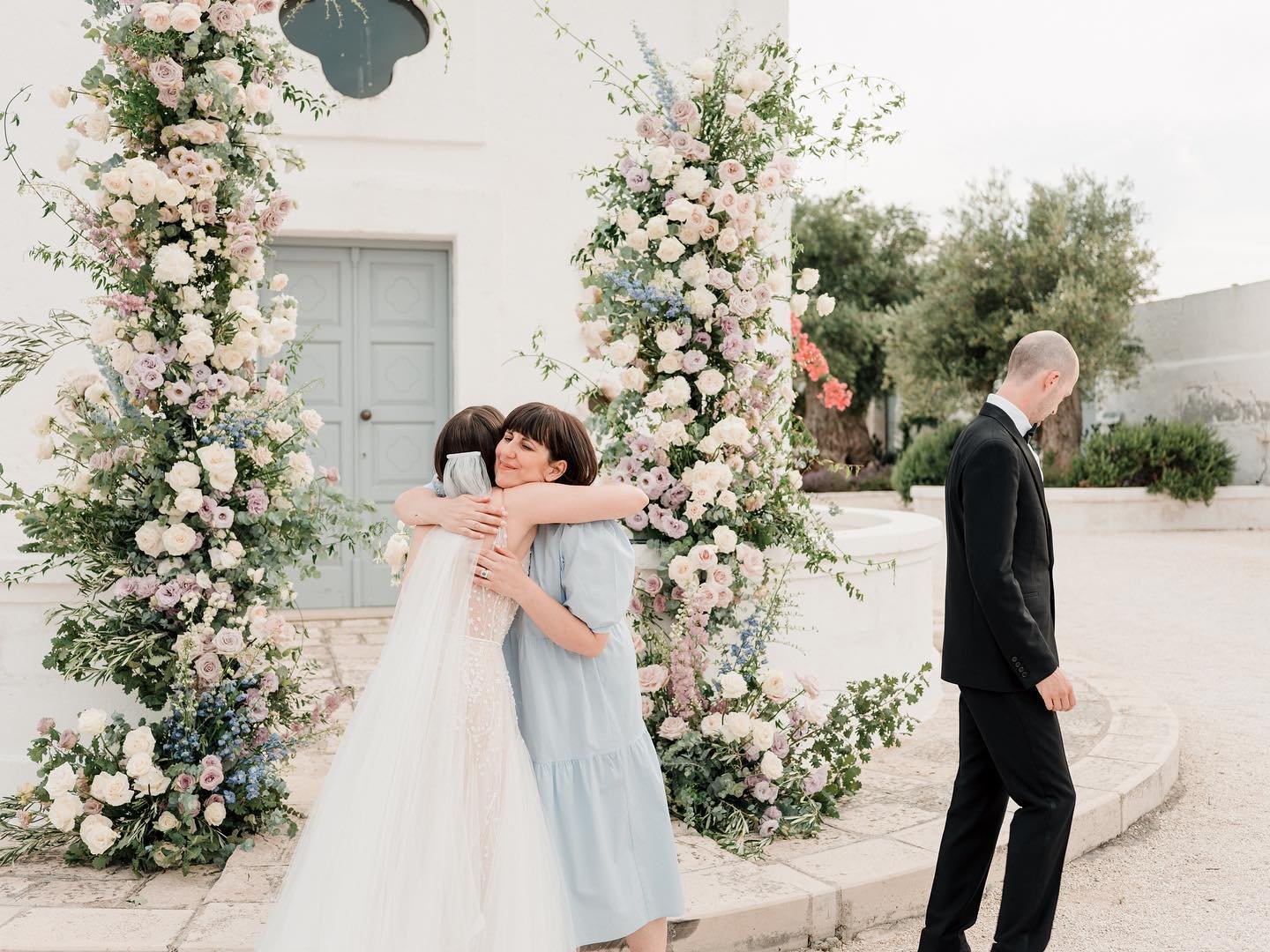
During the wedding day, I am always deeply moved by the first look with the father. As a daughter myself, I know that this is a moment the bride will carry in her heart forever. It is an honour for me to witness it each time.
• What is it about Tuscany that continues to inspire you creatively when designing weddings?
Everything. Tuscany, to me, is a real and living territory, the place where I was born, where my grandparents were born, and where their grandparents were born as well. It is not a product I sell. It is my roots, my inheritance. It is the stories of my family. I still remember my grandmother explaining to me what the word Tuscany meant. I remember that moment clearly.
Today, the adjective iconic is fashionable, but before being an icon, Tuscany is an archetype.
The expression of something deeply rooted in people’s sensibility, not only in those who were born here or discovered it later. It is a place of beauty that speaks to everyone, and that is why it attracts so many visitors.
I have also had the opportunity to study its landscape: how it was shaped by human hands, the role villas once played within that landscape and its economy, and how those functions ultimately defined their aesthetic identity. I carry all of this with me whenever I travel and visit new places.
Over the years, Tuscany has also developed an exceptionally rich and high-level hospitality offering, which is a great support for anyone working in destination weddings.
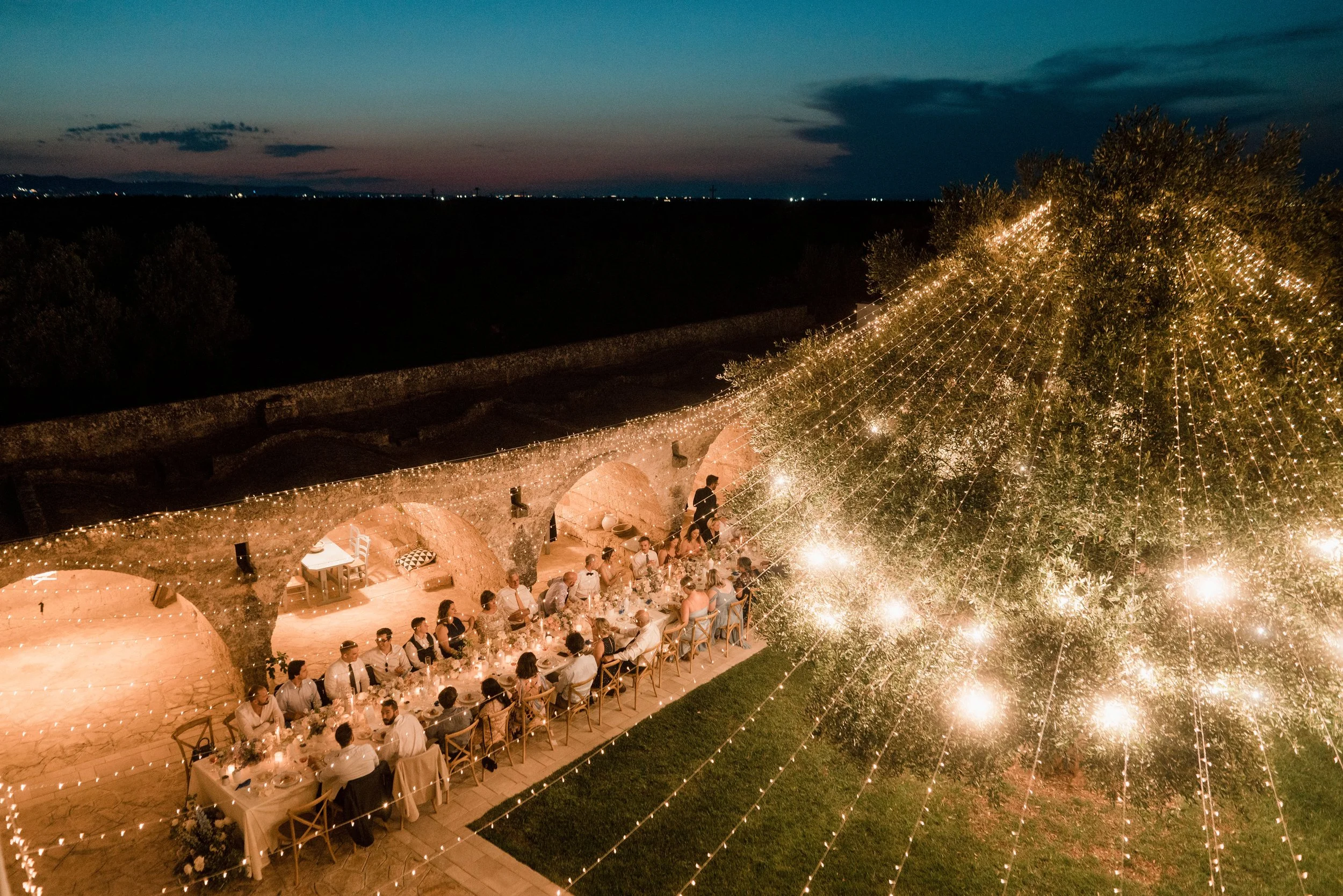
• Are there any lesser-known locations in Tuscany that you feel are still underrated for destination weddings? Can you share them with us?
Certainly. The Mugello area, charming small islands such as Giglio, Lunigiana, between Tuscany and Liguria with its castles, and many others besides.
• What is the difference between a wedding planner and a wedding planner & designer?
A designer has a vision and does not leave the couple alone in shaping the aesthetic of their wedding. A planner, no matter how skilled, often has to rely on the vision of their vendors who work on the style of the event, such as a floral designer.
A planner & designer has a stronger ability to coordinate vendors from an aesthetic point of view and can also guide less structured or less experienced suppliers in that direction, finding solutions independently when needed.
• When you first meet a couple, how do you translate their personality into a cohesive wedding concept?
I listen to them and observe them. I read them carefully. I invite them to send me anything that resonates with them, not only within the context of weddings, but in terms of their style more broadly, so I can understand their aesthetic patterns.
I ask them questions, but above all I try to create the conditions in which they feel free to express themselves, without any need to be consistent. Consistency is not necessary in the initial stage.
• Do you usually start from the venue, the couple’s story, or a visual idea when curating a wedding?
Everything you mentioned, in that order. The couple’s story helps me develop a vision that gives direction to the venue search. The venue comes afterwards, as the result of a process.
This applies when the couple contacts me before choosing the venue, which would be the best solution for them, because couples usually know what they want from an aesthetic point of view, but often find it difficult to evaluate the logistics of the event.
• How do you balance timeless elegance with current trends when designing your events?
I love timeless aesthetics, but at the same time I have nothing against trends. They simply need to resonate with you, because they share something with who you are or connect in some way to your story.
Chasing trends only to be published or to go viral diminishes the meaning of a wedding and, beyond that, it does not even work. If it is a trend, it means thousands of others have already done it. Your wedding deserves something more than that.
• “What details do you believe guests feel the most, even if they don’t consciously notice them?
This is a difficult question. You are asking me whether I can know what hundreds of people, all different in culture and sensibility, who have simply responded to an invitation, are looking for. Be cautious of answers given with too much certainty.
Every wedding is different, and every couple will have different guests with different needs. This is a very important aspect that should be carefully considered during the planning process together with the couple.
One element that is important for everyone, however, is the rhythm of the wedding. This is not only the result of the timeline, but also of the atmospheres created throughout the different phases of the event.
The absence of empty moments, with every part of the reception thoughtfully planned and placed within its context. The result feels natural and goes unnoticed.
• From your perspective, what makes a photographer truly elevate the overall wedding experience?
A photographer with real experience does far more than capture beautiful images. They become an essential part of the team and contribute to the overall flow of the day.
The photographers I value most collaborate with me when shaping the timeline and communicate their timing needs in advance. This helps us protect the rhythm of the celebration, avoid unnecessary delays, and ensure the couple is never pulled away at the wrong moment.
They also understand that a wedding is a lived experience before it is a visual one. While creating meaningful imagery, they remain attentive to what the couple and guests are feeling in real time.
Because they are by the couple’s side for most of the day, their presence matters greatly.
Discretion, warmth, emotional intelligence, and the ability to move naturally within the atmosphere are what truly elevate the experience.
• What are international couples often surprised by when planning a wedding in Tuscany?
I have often seen international couples surprised by what they initially perceive as a certain slowness in suppliers’ response times, especially during the busiest periods of the year.
What often changes their perspective is the wedding day itself. With the presence of a planner, clear coordination, and a well-structured timeline, everything moves with intention and flow. Each supplier knows where to be, what to do, and when to do it, allowing the day to unfold smoothly and without unnecessary stress for the couple.
At the same time, Italian suppliers often give their very best when it matters most. There is a strong culture of hands-on problem solving, adaptability, and pride in delivering beautifully under pressure. What may seem relaxed during the planning stage often reveals itself, on the wedding day, as experience, precision, and reliability.
When these elements align, couples are often pleasantly surprised by how seamless and refined the final result feels.
• How do you help couples create an experience for their guests, not just an event?
I ask about their guests, their age range, and their interests. Whether they are couples or families, whether they have young children, and whether it is their first time visiting Italy. I also want to understand how they will be organized, how they will arrive, and when they will leave.
Very often, the wedding becomes part of a wider and more complex trip. Some guests may have rented a car, others may rely on organized transfers, while some may be traveling with a private driver. I also ask about their relationship with the couple. Are they family members, or close friends?
As always, I try to understand who they are and what they might appreciate
• What challenges come with destination weddings, and how do you turn them into strengths?
Destination weddings naturally come with more moving parts. Guests are traveling from different countries, timelines are often longer, expectations can be high, and logistics become more layered. Travel schedules, language differences, transportation, accommodation, weather plans, and coordinating multiple days of events all require careful attention.
Distance asks for clearer communication, so the planning process becomes more structured and reassuring. Complex logistics invite thoughtful organization, which allows guests to feel cared for from arrival to departure. Different cultures and backgrounds bring richness, making the celebration more personal and meaningful.
It becomes a shared experience, often remembered as an important chapter in their lives. When guided well, what seems complex at first becomes the very reason destination weddings feel so special: they create time together, deeper connection, and memories that last far beyond the event itself.
• What moments during a wedding day do you personally find the most meaningful?
As I mentioned before, the moment that moves me the most is often the first meeting between the parents and the couple, as well as the first dances. The couple are emotional, of course, but in some way they already know what awaits them, because we have planned the wedding together. Parents and grandparents, on the other hand, the closest family members, often discover only on the wedding day what has truly been created, and suddenly find themselves inside a film where their children are the main characters.
Sometimes they look genuinely surprised, as if they only fully realize in that moment what is happening.
And then, naturally, the emotional peak of every wedding is the bride’s arrival at the ceremony. Everyone is waiting for her.
• What defines a truly unforgettable wedding for you?
How the energy of the couple and their guests responds to the atmosphere I helped create.
• If you could give one piece of advice to couples planning a wedding in Tuscany, what would it be?
Commit seriously to choosing your wedding planner: it is one of the most important decisions you will make, because she will help you find the right vendors for you.
Do not choose the professional who impresses you most at first glance. Save the wow effect for the wedding itself, not for marketing. Take your time, observe carefully, and look into things thoughtfully.
Ask every question you need to ask. Then choose someone you genuinely trust.
Not blind trust. A good planner never asks for that. She earns trust through competence, clarity, and consistency. Collaborate with her. Let her support you especially in the areas where you feel most vulnerable or uncertain.
If you have chosen well, she will find the right venue for you, not the other way around. You can also use Facebook groups to ask for suggestions, if you’d like, but use them wisely. Avoid vague questions. Ask specific ones and provide context.
• Looking ahead, how do you see luxury destination weddings evolving in the next few years?
The one we choose to build.
I started my own business during the pandemic. In the complete absence of real guidance about what would happen next, I developed greater awareness and, above all, clarity. There are many possible directions for this industry. My hope is that it chooses one that does not reward individualism, because building strong networks and offering couples a clear, structured experience is essential.
As for me, I have been a member for years of the national industry association WPI, and I have also chosen to join WIM, based in Florence, which is helping reshape the destination wedding in Italy.