

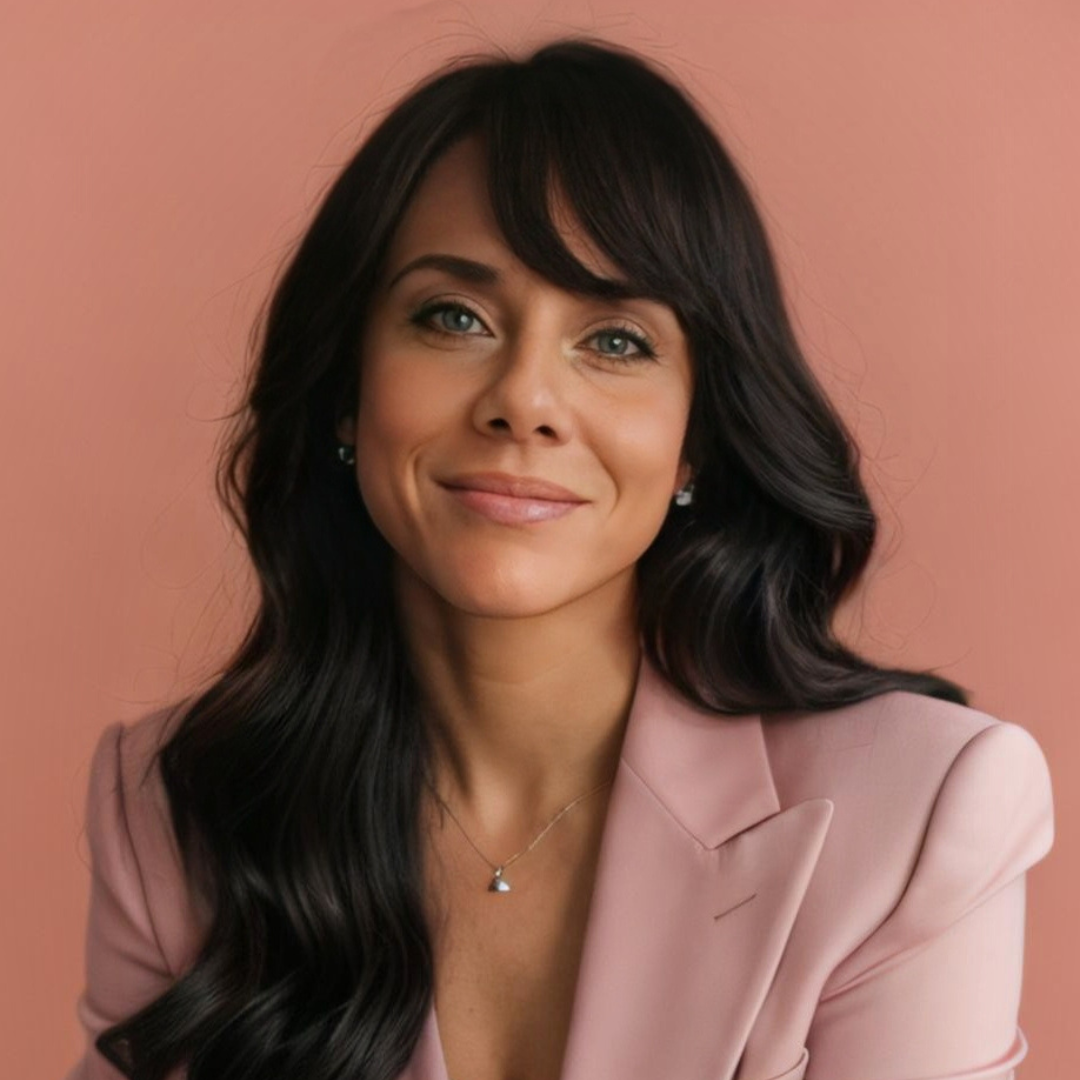
For todays interview, we have Valentina Bianchi a wedding planner based in Italy.
Can you tell us a bit about your journey into wedding planning and what led you to focus on destination weddings in Italy?
I was born and raised in Milan and I’ve lived on Lake Maggiore for over a decade. Italy is home: it’s the culture and the language I grew up in, and it’s the lens through which I naturally see the world. Over the years I’ve worked with a lot of American clients and I’ve learned how they think, what they expect, how they like to communicate. At some point I realized that VB Wedding Studio is just the shape I gave to something I’d been doing for a long time: helping people who love Italy understand how it actually works. I focus on Italy because you can’t really plan a wedding here if you don’t understand the culture from the inside.
How would you describe your signature style, and how do you ensure each wedding still feels unique to the couple?
I don’t really feel like I have one fixed “signature style”, and I’m completely fine with that. I’m not interested in making every wedding look like mine. What I do have is a very clear way of working. I listen carefully, I ask specific questions, and then I use what Italy gives us to bring out what already matters to that couple. Because of that, the result looks different every time. The intention behind it is what stays the same.
You approach weddings as curated experiences rather than just events, what does that mean in practice when you’re planning a wedding?
When I say “experience”, I’m talking about the day as a whole, not just the pretty moments. I think about what guests find when they arrive, what they see first, how the mood shifts from the ceremony to dinner, and how the night closes. I care a lot about rhythm. I pay attention to the little transitions that no one notices when they’re done well, but everyone feels when they’re not. A wedding in Italy should feel natural and inevitable, as if the place and the day fit you perfectly, and everything around you quietly tells you that you’re exactly where you’re meant to be.
What are the biggest challenges couples face when planning a wedding in Italy from abroad, and how do you help them navigate these?
Planning a wedding in another country, in a language that isn’t yours, with customs you don’t really know, is genuinely hard. Most couples only realise how many questions they have when they’re already in the middle of it. Italian vendors have their own pace, their own way of communicating, their own habits in business. That’s the world I grew up in. At the same time, I know how my American couples think, what reassures them, what frustrates them, what they need explained and when. My work lives right in between those two worlds.
From your perspective, what makes a great collaboration between a wedding planner and a photographer?
For me, the relationship with the photographer is deeply personal. It goes far beyond logistics or timing. It’s about energy, sensitivity, and being on the same wavelength from the very beginning. When that alignment is there, everything feels easier, more intuitive. On a wedding day, we’re both working close to emotion, just in different ways. I’m creating the conditions for a moment to happen naturally, and the photographer is there to hold that moment still, to turn it into memory. There’s something very subtle and very strong in that connection. We need to read the room in a similar way, feel when to step in, when to disappear, when to protect the atmosphere, and when to let it breathe. This way, the day flows with a different kind of harmony, and the couple feels it too. They don’t feel pulled in different directions. They feel supported by one shared energy around them. That’s when the most beautiful work happens.
A wedding day can feel effortless or chaotic depending on what happens behind the scenes—what are some key elements you focus on to ensure everything flows perfectly?
The timeline is my favorite thing to create a seamless wedding day. I usually build it backwards, starting from the end of the evening and working my way to the beginning. Every part of the day has how long it should last and how long it can last at most. I add small buffers between transitions, especially when there are many guests. I keep three versions of the timeline: one for the couple, one for the vendors, and one for myself with all the practical notes. When something changes, and something always changes! there’s already space for it.
The couple doesn’t notice. That’s exactly how I want it.
You clearly place strong importance on design and detail—what are some of the small elements that you believe make the biggest difference?
The things guests remember most are often not the big-ticket items. They remember how it felt to sit down at the table. They remember the music changing at the right moment. They remember the smell of the garden during aperitivo. I work a lot on those layers you can’t always see but you definitely feel, because that’s where emotion sits. A wedding can be visually impressive and still feel a bit empty. I’m more interested in the kind of beauty that really stays with people.
How do you balance current trends with creating something timeless that will still feel relevant in 20 years?
I’m very honest with my couples when something is clearly a trend. I don’t have anything against trends , some are really beautiful, but I want them to choose them consciously. I often ask them to imagine looking at their photos in fifteen years. If they feel they’d still love what they see, we go for it. If they’re unsure, we look for something that comes more directly from their story. In my experience, the choices that age well almost always start from who they are, not from what’s popular that year.
You work across some of the most iconic regions, do you have a few favorite venues or locations that always inspire you?
Lake Maggiore, definitely. It’s home for me. I’ve lived here for years; I know the villas, the people, the light at every time of day. Lake Maggiore has a quiet kind of beauty. It doesn’t shout. It’s less known abroad than Lake Como, and many of my couples actually like that. I do work across Italy thanks to a network of partners, but this is the place where my work goes the deepest.
What is one piece of advice you would give to couples who are just starting to plan their wedding in Italy?
Find your person first. Before the venue, before the mood board, before anything else. When you’re planning a wedding in another country, the key decision is who you choose to guide you through it. You need someone who understands the place, who understands you, and who you trust enough to let go. When that relationship feels right, everything else becomes much easier to navigate.
Is there a wedding you’ve planned that has stayed with you emotionally or creatively? What made it special?
One of the weddings I cherish the most was a small celebration here on the lake. Few guests, very intimate. At the end of the evening the bride’s father came to me and said, “We knew getting married in Italy would be extraordinary, but you went beyond our wildest expectations. You took care of every detail, even things we didn’t know mattered, and you gave us the freedom to simply enjoy the day with our family, knowing everything else was taken care of.” I still think about that. The weddings that move me the most are the ones where the couple isn’t busy managing or checking on details, but is fully there, laughing, crying, talking with their guests, and actually feeling the day as it happens.
What does a truly unforgettable wedding feel like to you?
A really good wedding feels like it couldn’t belong to anyone else. The way the place, the people and the rhythm of the day come together feels natural, not staged. Guests go home and keep talking about it because something in what they saw, ate, heard and felt stayed with them, even if they can’t quite explain why. Italy has this way of amplifying everything, and when a wedding connects with that, it leaves a mark. That’s what I’m working towards every time.