

In the world of destination weddings in Italy, where beauty often takes center stage, Silvia Bacchi brings a refreshingly thoughtful perspective, one that begins not with aesthetics, but with experience. With a background in travel planning and a deep understanding of how people move through and feel within a place, she approaches each wedding as a carefully crafted journey rather than a visual production.
In this interview, Silvia shares her philosophy on designing weddings from the inside out, her approach to working with international couples, and why clarity, structure, and intention are the true foundations of unforgettable celebrations.
Thank you Silvia for joining us in this feature.
Can you tell us a bit about your journey into wedding planning and what led you to focus on destination weddings in Italy?
My background is in travel planning, where I worked as a travel agent and as a technical director. That’s where I developed a strong understanding of guest logistics, movement, and how people actually experience a place. Alongside this, I’ve always been close to the operational side of events through my family environment, which gave me a very direct view of how timing, service and coordination shape what guests really live.
Over time, I realised that destination weddings in Italy often start from the wrong place, the location or the aesthetic, while what’s missing is structure and clarity.
Today, I guide couples to build their wedding from the inside out, starting from the experience and the flow, and only then translating it into a place, a timeline and a design.
How would you describe your signature style, and how do you ensure each wedding still feels unique to the couple?
I don’t really define my work through a visual style.
What defines it is how the experience is built.
Each wedding is shaped around how the couple wants to live those days, not around a predefined aesthetic. The visual outcome comes later, it’s a consequence, not the starting point.
Beauty alone is not enough. It only becomes meaningful when it’s supported by clarity, timing and intention.
You approach weddings as curated experiences rather than just events, what does that mean in practice when you’re planning a wedding?
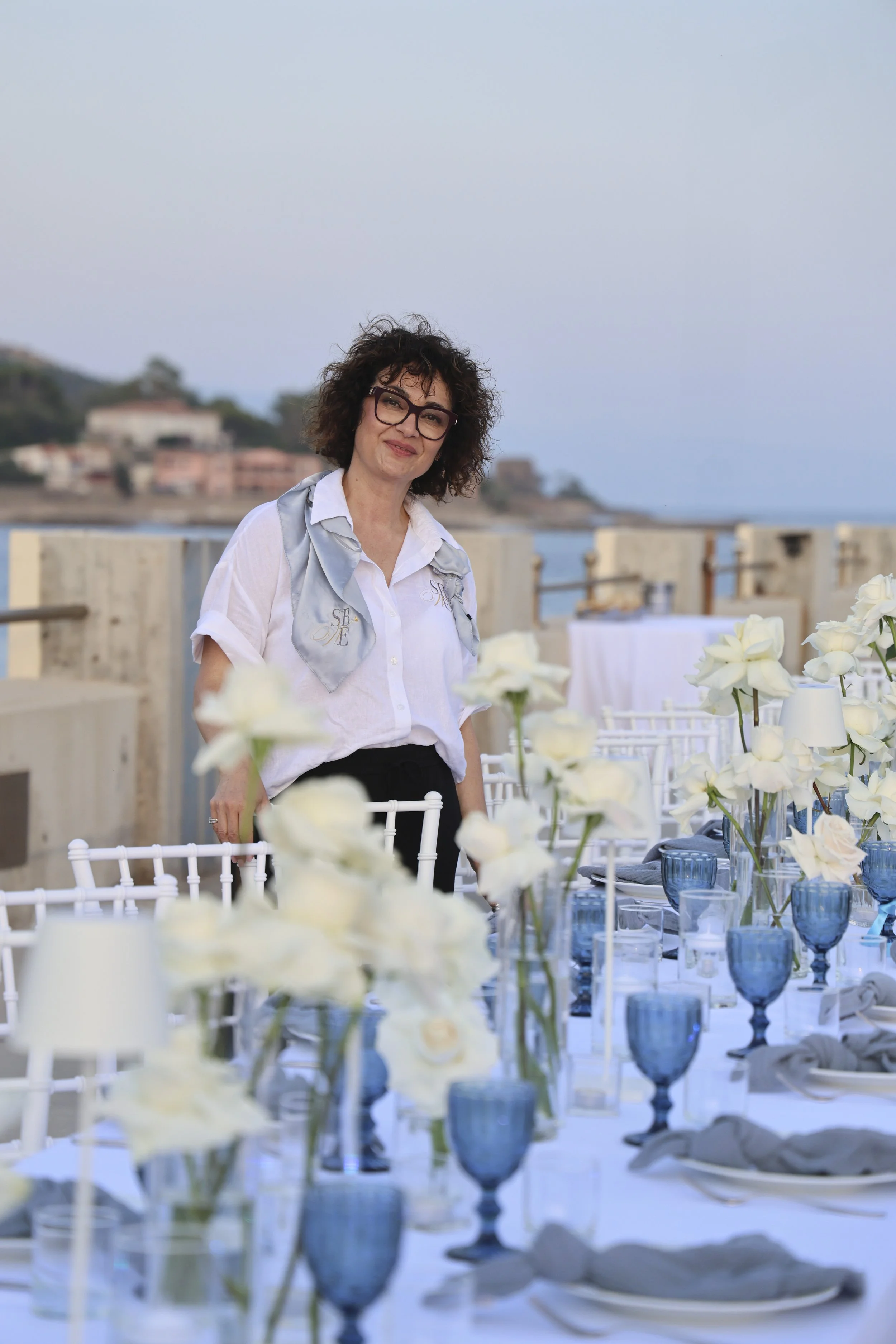
When I say I design an experience, I mean that I look at the wedding as something guests move through, not something they simply observe. The experience always starts from the couple, and how they want to feel and be present in those days.
In Italy, celebrations are not meant to be watched, they’re meant to be lived, shared, felt together.
In practice, I work on how people arrive and feel welcomed, how transitions happen, how energy builds during the day, and how information is communicated without interrupting what’s happening.
A wedding shouldn’t feel like a controlled production. It should feel natural, immersive, almost effortless, even if everything is carefully structured behind the scenes.
What are the biggest challenges couples face when planning a wedding in Italy from abroad, and how do you help them navigate these?
The biggest challenge is not the distance, it’s making decisions without context.
Couples are exposed to endless inspiration, but without a clear way to understand what actually works in Italy in terms of logistics, timing and budget.
My role is to bring clarity.
I help them define priorities, understand the impact of their choices, and build a structure that allows them to move forward with confidence, rather than second guessing everything.
From your perspective, what makes a great collaboration between a wedding planner and a photographer?
From my perspective, the photographer is not just documenting the day, but interpreting it.
I tend to observe weddings with a photographic eye, so I’m very aware of how moments unfold, how light, space and timing come together.
Because of this, I don’t see our roles as separate. The way a wedding is structured directly affects what can be captured.
Choosing the right photographer is essential, not just in terms of style, but in the ability to connect with the couple and to move within the rhythm of the day.
When that alignment is there, everything feels more natural, and it shows.
A wedding day can feel effortless or chaotic depending on what happens behind the scenes—what are some key elements you focus on to ensure everything flows perfectly?
What makes a wedding feel effortless is rarely visible.
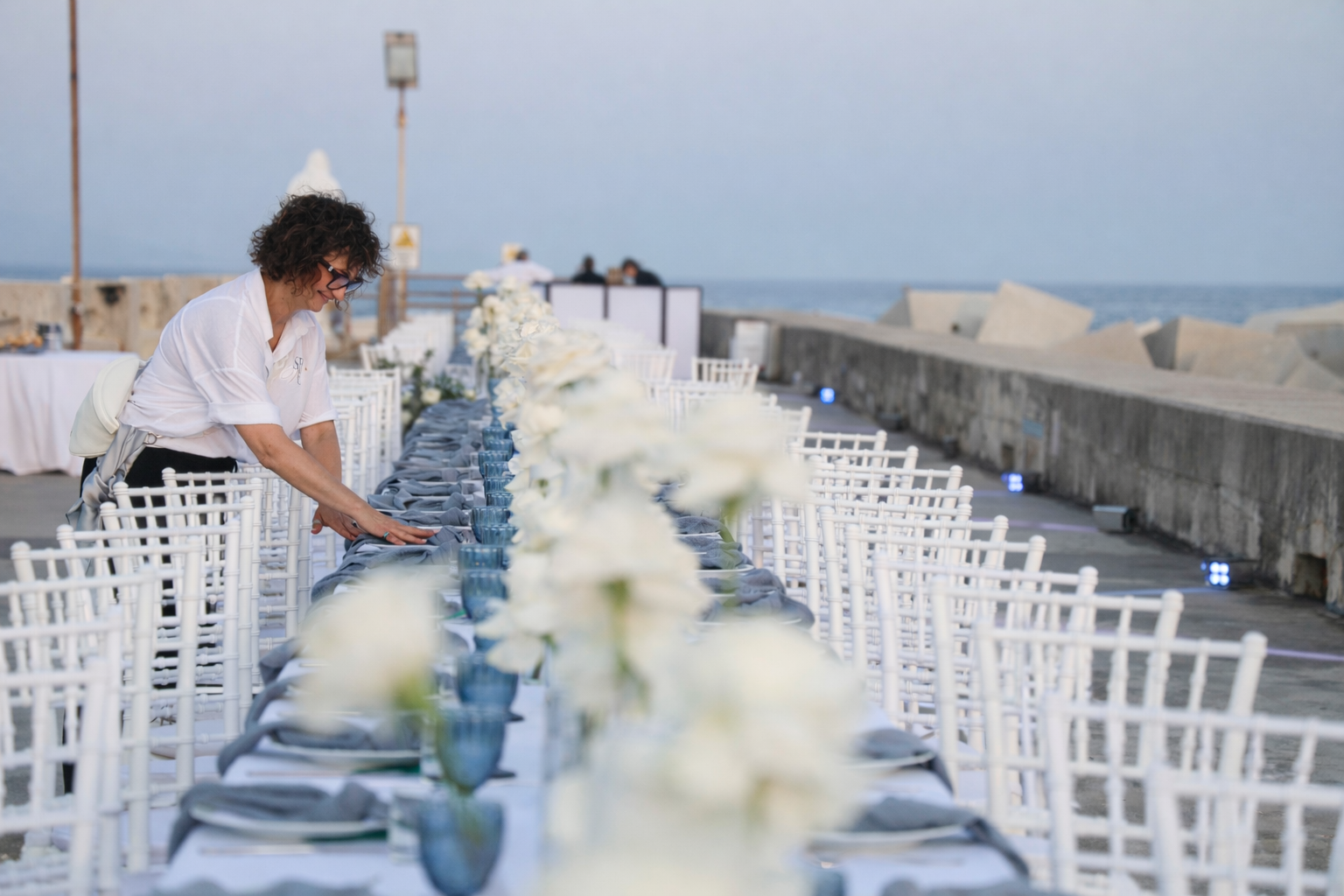
I focus on clarity of timeline, not rigid but well structured, on transitions, on guest communication, and on coordination between vendors.
But more than anything, I protect the rhythm of the day so that the couple can stay fully present in it, not managing it.
When the flow is right, everything feels natural, even when things are being adjusted behind the scenes.
You clearly place strong importance on design and detail—what are some of the small elements that you believe make the biggest difference?
Details matter, but not in isolation. The ones that really make a difference are often not decorative, but experiential. How guests understand where to go, how long they wait, whether they feel taken care of without even noticing it.
Design is part of this, of course, but it should support the experience, not take over. When this is right, both the couple and their guests feel at ease, in different but connected ways.
How do you balance current trends with creating something timeless that will still feel relevant in 20 years?
I don’t really start from trends. I start from context, from people, from the experience we want to create.
When a wedding is built on that, it naturally feels timeless, because it reflects something real, not something replicated. Trends can be part of it, but only if they actually make sense within the structure of the day.
You work across some of the most iconic regions, do you have a few favorite venues or locations that always inspire you?
Italy offers an incredible variety of landscapes, and each one creates a completely different experience.
Rather than having fixed favourites, I focus on finding the place that truly aligns with the couple’s vision and with how they want the wedding to feel.
The same guest count and structure can work beautifully in one location and feel completely off in another.
A venue is never just a backdrop, it defines logistics, timing and the overall guest experience.
What is one piece of advice you would give to couples who are just starting to plan their wedding in Italy?
Start with clarity, not with the venue.
Before choosing a location, understand how many guests you want, what kind of experience you want to create, and what actually matters to you.
The right order protects everything.
When those elements are clear, every decision becomes easier, and much more intentional.
Most Memorable Wedding
There have been many, but one that stayed with me was also my birthday.
Without it being expected, the couple made me feel included throughout the entire day, in small gestures, in public acknowledgments, all the way to the end, when guests gathered with a guitar to sing for me before leaving.
It was a wedding with strong Irish roots, and what I remember most is a moment that wasn’t planned at all. While the younger guests were at the party, the older generation gathered in the olive grove, sitting in a circle, singing Irish folk songs together.
It felt intimate, real, deeply connected.
That’s what stays with me, not how it looked, but how naturally people came together and shared the moment.
Final Thoughts
An unforgettable wedding is not about how it looks, but how it moves. It shouldn’t feel like a controlled production, but like something people naturally flow through. It starts with the couple, and how present they are within it. When the structure is right, it disappears. What remains is presence, connection, and a sense of ease that you can’t really stage. That’s what stays.
For more information visit - www.silviabacchi.com